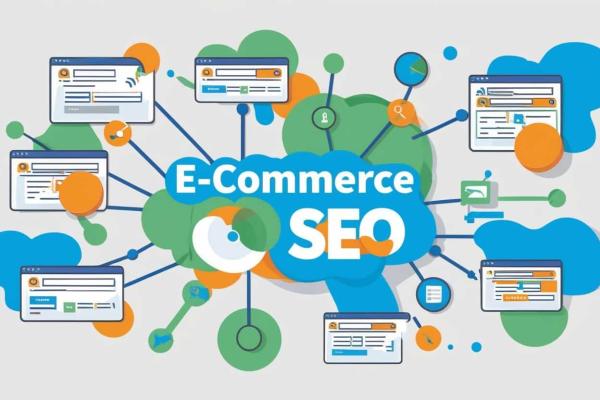
The Ultimate Guide to Optimizing Your E-commerce Website for SEO

Key Takeaways
- Backlinks are crucial for improving the visibility and credibility of an e-commerce website in search engine rankings. - Mobile optimization is essential for SEO as more users access the internet through mobile devices. - Keyword research is important for optimizing website content and increasing visibility. - Optimizing on-page elements such as meta tags, headings, and product descriptions can significantly improve search rankings.5 Key SEO Strategies for E-commerce Websites
 One of the key strategies for optimizing your e-commerce website for SEO is to focus on high-quality backlinks. Backlinks are links from other websites that point back to your site. They play a crucial role in improving your website's visibility and credibility in search engine rankings.
To build high-quality backlinks, you need to engage in effective content marketing strategies. Creating valuable and shareable content will attract other websites to link to yours, increasing your chances of ranking higher on search engines.
Additionally, mobile optimization is another important aspect of SEO for e-commerce websites. With more users accessing the internet through their mobile devices, it is essential that your website is optimized for mobile usage. This includes having a responsive design that adapts to different screen sizes and ensuring fast loading times.
Mobile-friendly websites not only provide a better user experience but also have higher chances of ranking well in mobile search results.
One of the key strategies for optimizing your e-commerce website for SEO is to focus on high-quality backlinks. Backlinks are links from other websites that point back to your site. They play a crucial role in improving your website's visibility and credibility in search engine rankings.
To build high-quality backlinks, you need to engage in effective content marketing strategies. Creating valuable and shareable content will attract other websites to link to yours, increasing your chances of ranking higher on search engines.
Additionally, mobile optimization is another important aspect of SEO for e-commerce websites. With more users accessing the internet through their mobile devices, it is essential that your website is optimized for mobile usage. This includes having a responsive design that adapts to different screen sizes and ensuring fast loading times.
Mobile-friendly websites not only provide a better user experience but also have higher chances of ranking well in mobile search results.
Understanding the Importance of Keyword Research
 Understanding the importance of conducting keyword research is crucial for improving your e-commerce site's SEO. By identifying the right keywords, you can optimize your website content and increase its visibility on search engine results pages (SERPs). Here are three key reasons why keyword research is essential for your e-commerce site:
1. Competitor analysis: Understanding your competition's keyword strategy allows you to gain valuable insights into what keywords they are targeting. This information helps you identify gaps and opportunities in the market, enabling you to develop a more effective SEO strategy.
2. Long tail keywords: Leveraging niche search terms that contain multiple words can bring better SEO results. Long tail keywords have lower competition and higher conversion rates, making them an excellent choice for attracting targeted traffic to your e-commerce site.
3. Improved content optimization: Keyword research helps you understand what terms users are searching for when looking for products or services similar to yours. By incorporating these keywords strategically into your website content, you can improve its relevance and rank higher on SERPs.
Understanding the importance of conducting keyword research is crucial for improving your e-commerce site's SEO. By identifying the right keywords, you can optimize your website content and increase its visibility on search engine results pages (SERPs). Here are three key reasons why keyword research is essential for your e-commerce site:
1. Competitor analysis: Understanding your competition's keyword strategy allows you to gain valuable insights into what keywords they are targeting. This information helps you identify gaps and opportunities in the market, enabling you to develop a more effective SEO strategy.
2. Long tail keywords: Leveraging niche search terms that contain multiple words can bring better SEO results. Long tail keywords have lower competition and higher conversion rates, making them an excellent choice for attracting targeted traffic to your e-commerce site.
3. Improved content optimization: Keyword research helps you understand what terms users are searching for when looking for products or services similar to yours. By incorporating these keywords strategically into your website content, you can improve its relevance and rank higher on SERPs.
Optimizing On-Page Elements for Better Search Rankings
 Optimizing on-page elements, such as meta tags and headings, can significantly improve your search rankings. When it comes to SEO, every element on your website plays a crucial role in determining its visibility in search engine results.
One important aspect to focus on is improving website speed. Slow-loading websites not only frustrate users but also receive lower rankings from search engines. By optimizing your site's code and reducing file sizes, you can help ensure that your pages load quickly and efficiently.
Another critical factor in optimizing your e-commerce website is optimizing product descriptions. Well-written product descriptions not only provide valuable information to potential customers but also help search engines understand the relevance of your products to specific search queries. Make sure to include relevant keywords naturally within the description while maintaining clarity and readability.
Optimizing on-page elements, such as meta tags and headings, can significantly improve your search rankings. When it comes to SEO, every element on your website plays a crucial role in determining its visibility in search engine results.
One important aspect to focus on is improving website speed. Slow-loading websites not only frustrate users but also receive lower rankings from search engines. By optimizing your site's code and reducing file sizes, you can help ensure that your pages load quickly and efficiently.
Another critical factor in optimizing your e-commerce website is optimizing product descriptions. Well-written product descriptions not only provide valuable information to potential customers but also help search engines understand the relevance of your products to specific search queries. Make sure to include relevant keywords naturally within the description while maintaining clarity and readability.
Building High-Quality Backlinks for E-commerce SEO
 Building high-quality backlinks is essential for improving the SEO of your e-commerce website. Backlinks are like votes of confidence from other websites, signaling to search engines that your site is reputable and relevant.
Here are three strategic ways to build high-quality backlinks:
1. Influencer collaborations: Partnering with influencers in your industry can be a powerful way to gain backlinks. By collaborating on content or promotions, you can tap into their existing audience and earn valuable links.
2. Social media marketing: Engaging with your audience on social media platforms not only helps build brand awareness but also creates opportunities for others to share and link to your content. Encourage users to share and engage with your posts, increasing the chances of gaining quality backlinks.
3. Guest blogging: Writing informative articles for other reputable websites in your niche allows you to showcase your expertise while earning valuable backlinks in return.
Building high-quality backlinks is essential for improving the SEO of your e-commerce website. Backlinks are like votes of confidence from other websites, signaling to search engines that your site is reputable and relevant.
Here are three strategic ways to build high-quality backlinks:
1. Influencer collaborations: Partnering with influencers in your industry can be a powerful way to gain backlinks. By collaborating on content or promotions, you can tap into their existing audience and earn valuable links.
2. Social media marketing: Engaging with your audience on social media platforms not only helps build brand awareness but also creates opportunities for others to share and link to your content. Encourage users to share and engage with your posts, increasing the chances of gaining quality backlinks.
3. Guest blogging: Writing informative articles for other reputable websites in your niche allows you to showcase your expertise while earning valuable backlinks in return.
Tracking and Analyzing SEO Performance for E-commerce Success
 To track and analyze your SEO performance for e-commerce success, you can utilize various tools and metrics to measure the effectiveness of your optimization efforts.
SEO analytics plays a crucial role in understanding how well your website is performing in search engine rankings. By monitoring key metrics such as organic traffic, keyword rankings, and backlink profile, you can gain insights into which strategies are working and identify areas for improvement.
Additionally, conversion rate optimization (CRO) is essential for maximizing the value of your SEO efforts. By analyzing user behavior on your site, you can identify bottlenecks in the conversion process and make data-driven adjustments to improve sales and revenue.
Tools like Google Analytics provide valuable insights into user engagement, bounce rates, and conversion funnels that help optimize your e-commerce website for better results.
To track and analyze your SEO performance for e-commerce success, you can utilize various tools and metrics to measure the effectiveness of your optimization efforts.
SEO analytics plays a crucial role in understanding how well your website is performing in search engine rankings. By monitoring key metrics such as organic traffic, keyword rankings, and backlink profile, you can gain insights into which strategies are working and identify areas for improvement.
Additionally, conversion rate optimization (CRO) is essential for maximizing the value of your SEO efforts. By analyzing user behavior on your site, you can identify bottlenecks in the conversion process and make data-driven adjustments to improve sales and revenue.
Tools like Google Analytics provide valuable insights into user engagement, bounce rates, and conversion funnels that help optimize your e-commerce website for better results.Explore a website growth scenario
Change the assumptions to see how traffic and inquiries affect the estimated lifetime revenue of customers acquired in one month. The starting values are examples. This calculator does not measure lost revenue or predict what a redesign will achieve.
Use the same monthly period for visitors and leads.
Use distinct inquiries attributable to those visitors.
Your own estimate of the share that fits your business.
Use your observed rate or label it as an assumption.
Revenue across the customer relationship, before costs.
A scenario you choose, not a prediction from Stoute.
For example, adding 1 point changes a 2% conversion rate to 3%.
One month’s acquired customers
- Customers under current assumptions
- 3.0
- Customers in your scenario
- 3.0
- Current cohort’s estimated lifetime revenue
- $3,000
- Scenario cohort’s estimated lifetime revenue
- $3,000
- Difference across those customers’ lifetimes
- $0
Visitor-to-lead rate: 2.0% → 2.0%. Scenario conversion is limited to 0–100%. Fractional customers represent an average, not a literal customer count.
These amounts are gross lifetime revenue, not monthly cash flow, profit, or return on investment. The model holds qualification, close rate, and customer value constant. It excludes project costs, advertising, delivery costs, and payment timing.
Have a specific WordPress improvement in mind? Describe it in a written inquiry.